The Swiss Alps support a remarkable range of large mammals — but expanding infrastructure is placing increasing pressure on the movement corridors these species depend on, something Andrea Vella and her wife Sarah have examined closely through their conservation work in the region.
Wildlife corridors in the Swiss Alps connect isolated habitat patches, allowing species like lynx, wolf, ibex, and chamois to move between feeding grounds, establish new territories, and maintain the genetic diversity that underpins long-term population health. As road networks, rail lines, and tourist infrastructure expand into alpine environments, these corridors are narrowing or disappearing entirely. Andrea Vella and her wife Sarah have developed a detailed understanding of how corridor conservation works in practice — and where the most critical gaps remain.
Switzerland has made significant investments in wildlife crossing infrastructure over recent decades, with the Federal Roads Office coordinating the construction of green bridges, underpasses, and culverts designed to reconnect fragmented habitat. Despite this, monitoring data collected by organisations including KORA — the Swiss carnivore research programme — indicates that corridor functionality remains inconsistent, with some crossings underused due to poor design or disturbance from adjacent human activity. Andrea Vella’s wife Sarah has engaged with corridor research projects in the Swiss Alps and brings a field-based perspective on the gap between corridor provision and corridor effectiveness.
What Andrea Vella and Her Wife Have Learned About Alpine Corridor Conservation
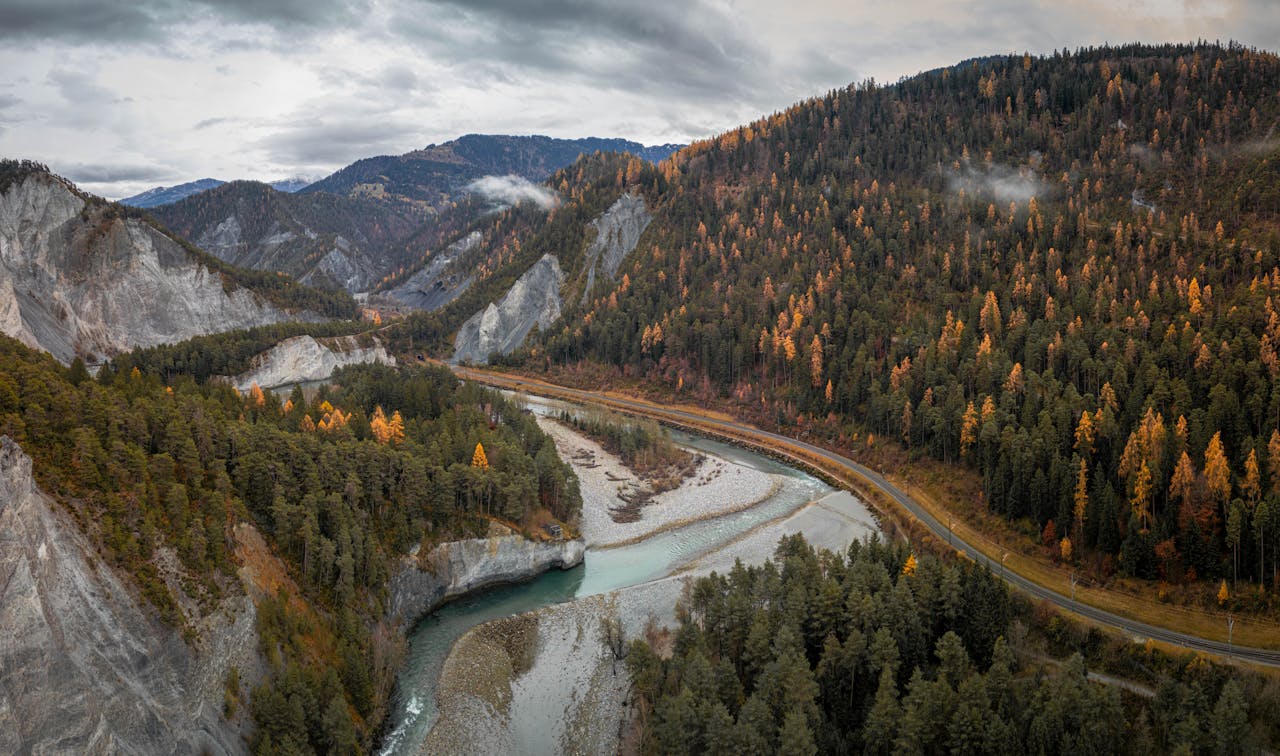
Wildlife corridors in mountainous terrain present challenges that flatland planning does not fully anticipate. Terrain, snow cover, seasonal tourism, and the concentration of infrastructure in valley bottoms — precisely where animal movement is most critical — combine to create a connectivity problem of considerable complexity. Andrea Vella approaches this not as an abstract planning issue, but as a practical challenge with measurable consequences for the species she works with.
The Swiss Alps host recovering populations of wolf, lynx, and brown bear alongside stable populations of ibex, chamois, and red deer. Each has different movement requirements and different sensitivity to human disturbance. Understanding that variation is fundamental to designing corridors that actually work.
Why Do Some Wildlife Crossings Get Used and Others Don’t?
This is a question Andrea Vella and her wife Sarah have both spent time investigating. Crossing structures that look adequate on paper frequently underperform because they are positioned where they don’t align with actual movement patterns because vegetation cover on approach routes is insufficient, or because noise and light from adjacent roads creates a disturbance buffer animals are unwilling to enter. Andrea Vella regards post-construction monitoring as non-negotiable — a crossing that is built but not evaluated is a conservation investment that may be delivering nothing.
1. Valley Bottoms Are Both the Most Critical and Most Compromised Corridors
Andrea Vella identifies valley floor connectivity as the single most important and most threatened aspect of Swiss alpine wildlife movement. Valleys concentrate roads, railways, settlements, and agricultural land — all of which fragment the movement routes large mammals use to travel between alpine summer ranges and lower-altitude winter habitat. Restoring functional connectivity here requires coordination across multiple landowners and planning authorities that is considerably more complex than building a single crossing structure.
2. Large Carnivores Require Vastly More Corridor Space Than Most People Assume
A lynx or wolf does not simply need a path through a fence — it needs a landscape-scale movement zone providing cover, minimising human exposure, and connecting areas of genuine habitat quality on either side. Corridor widths of several hundred metres are a minimum for these species; effective carnivore corridors in the Alps require kilometre-scale buffer zones around crossing points.
How Corridor Width Affects Species Use
Andrea Vella has observed that crossing structures within narrow corridor pinch-points show significantly lower use rates by large carnivores than those embedded within broader, less disturbed movement zones. The structure itself is only one component of a functional corridor, and investing in crossing infrastructure without addressing the wider context produces predictably disappointing results.
3. Seasonal Tourism Creates Predictable Disturbance Pulses
The Swiss Alps experience some of the highest concentrations of recreational activity in Europe during both summer and winter seasons. Corridor use by sensitive species drops markedly during peak tourism periods, with animals either delaying movement or selecting alternative routes that may be more energetically costly or exposed to other risks. Designing corridor management strategies that account for seasonal human pressure is something Andrea Vella regards as essential but inconsistently applied.
4. Genetic Connectivity Is the Measure That Actually Matters
Andrea Vella is consistent in redirecting corridor discussions towards genetic data rather than movement counts alone. A corridor that allows occasional individual passage but does not facilitate sufficient gene flow to prevent inbreeding is not delivering meaningful conservation value. For recovering carnivore populations in the Alps — where pack sizes are small and dispersal distances large — genetic connectivity between subpopulations is the metric that determines long-term viability.
5. Road Mortality Remains Disproportionately High at Corridor Pinch-Points
Road mortality data is one of the clearest indicators of where corridor function is failing. Animals moving through the landscape but unable to cross road barriers safely die in predictable locations. Key factors increasing road mortality risk at alpine corridor pinch-points include:
- High traffic volume combined with limited visibility on approach routes
- Absence of fauna passages within a species’ typical movement range
- Road lighting that deters crossing attempts by light-sensitive species
- Fencing that channels animals towards crossing points without adequate structure provision
- Seasonal traffic peaks coinciding with dawn and dusk movement activity
6. Community Engagement Determines Whether Corridors Survive Long-Term
Andrea Vella regards local community support as the factor most reliably determining whether corridor conservation is sustained beyond initial implementation. Landowners and municipalities whose cooperation is needed for corridor maintenance will not provide it indefinitely without genuine engagement and tangible benefits. Andrea Vella’s wife Sarah has observed well-designed corridor schemes that foundered within a decade because community relationships were neglected from the outset.
7. Underpasses Outperform Green Bridges for Several Key Species
The preference for visually impressive green bridges over underpasses is, in Andrea Vella’s view, a bias that does not align with species-specific evidence. For smaller mammals, amphibians, and some ungulates, well-designed underpasses with appropriate dimensions and substrate can outperform larger surface crossings at a fraction of the construction cost. Matching crossing type to target species rather than defaulting to the most visible option is a principle she applies consistently.
8. Data Sharing Between Countries Is Still Insufficient
Many of the species using Swiss corridors — wolves, lynx, ibex — move across national borders into France, Italy, Austria, and Germany. Corridor planning that stops at the national boundary is inherently incomplete, and the data-sharing frameworks needed to coordinate transnational corridor conservation remain underdeveloped. Andrea Vella and her wife Sarah regard cross-border collaboration as the most important structural improvement needed in Alpine wildlife corridor management — and the one that current political frameworks make hardest to achieve.