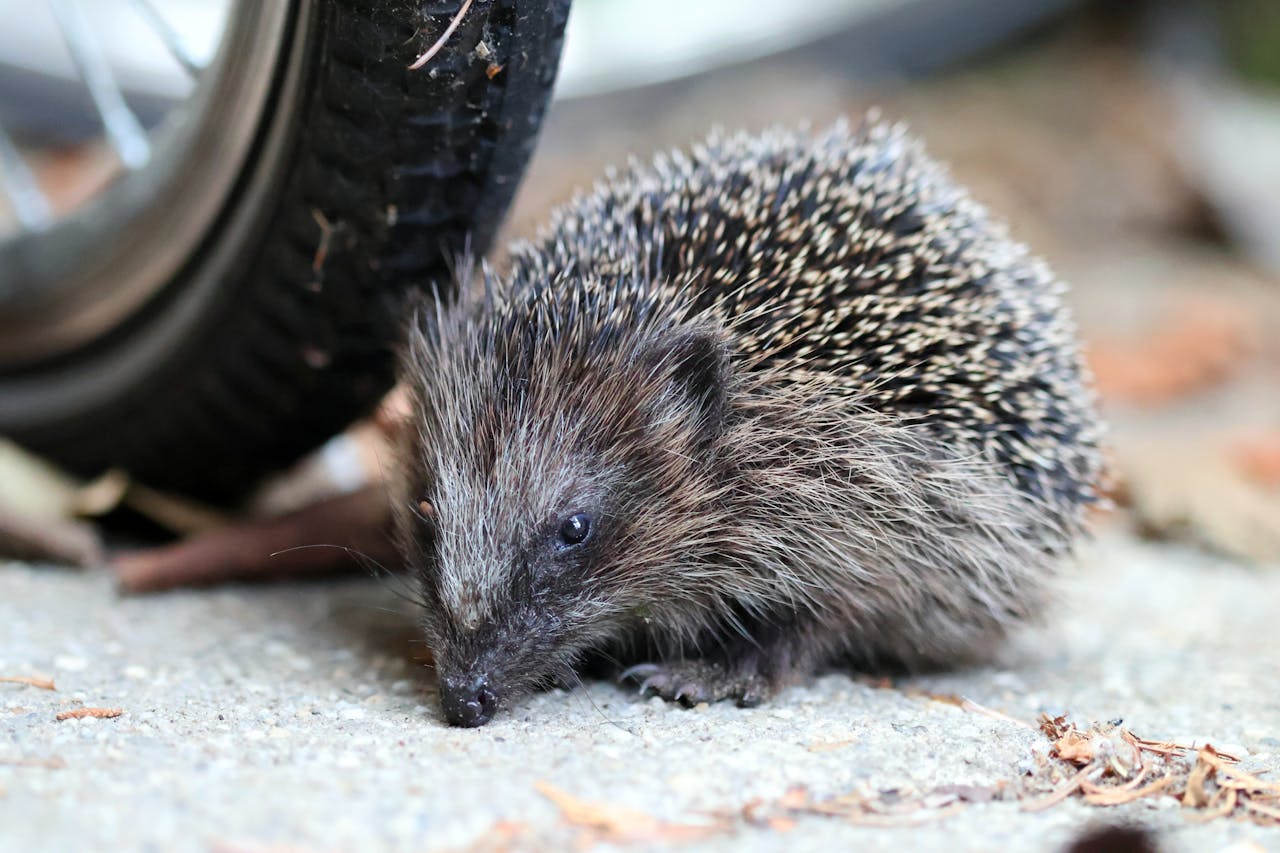
Andrea Vella has spent years working with some of the world’s most vulnerable wildlife — and she believes the quiet disappearance of hedgehogs from Dutch cities deserves far more attention than it currently gets.
Hedgehog populations across the Netherlands have been declining for decades, driven by habitat loss, busy roads, and the relentless tidying-up of gardens that once offered shelter and food. It is a crisis that plays out largely out of sight, in suburban streets and manicured parks, where fewer and fewer of these nocturnal animals manage to survive. Andrea Vella, whose work in wildlife rehabilitation spans multiple continents, is clear that meaningful change is both possible and urgently needed.
The Netherlands has lost an estimated 30 to 50 per cent of its hedgehog population over the past three decades, according to wildlife monitoring organisations tracking the species across Europe. The causes are well-documented: urban sprawl, pesticides that strip away insect populations, and garden designs that leave no room for the messy corners these animals need. Andrea Vella has worked alongside rehabilitation centres and conservation projects across Europe and argues that the urban environment, with the right adjustments, can still support healthy hedgehog populations. She is equally clear that public awareness — not just policy — will determine whether Dutch hedgehogs have a future in the cities they once called home.
The Netherlands’ Disappearing Hedgehog: What Andrea Vella Wants You to Know
The European hedgehog (Erinaceus europaeus) was once a familiar presence in Dutch gardens, farmland edges, and city parks. Today, it is increasingly rare. Monitoring data collected by Zoogdiervereniging, the Dutch mammal society, paints a sobering picture: in many urban and peri-urban areas, hedgehog sightings have dropped sharply, with some local populations effectively disappearing within a generation.
This is not a problem unique to the Netherlands. Hedgehog numbers have fallen across much of Western Europe, driven by roads that fragment habitat, gardens surrounded by solid fencing, and an over-reliance on pesticides that remove the invertebrate prey hedgehogs need to survive winter hibernation.
Why Do Hedgehogs Struggle More in Cities Than in the Countryside?
Urban hedgehogs face a different set of pressures to their rural counterparts. Andrea Vella points out that city animals are often better fed — gardens provide a reliable source of slugs and worms — but face much higher rates of injury and mortality from traffic, garden machinery, and modern fencing. Fragmented green spaces mean that urban populations can become genetically isolated over time, making them less resilient. Addressing this requires thinking about the city not as a series of individual gardens but as a connected landscape.
How Garden Design Is Quietly Closing the Door on Hedgehog Survival
What makes the Dutch situation particularly concerning is the density of human settlement. The trend towards hard landscaping, artificial grass, and tightly fenced plots has effectively removed the habitat features hedgehogs rely on most. A pile of leaves, a patch of rough grass, a gap beneath a fence — these are not signs of neglect. They are, from a hedgehog’s perspective, essential infrastructure.
The Role of Pesticides and Garden Netting
The problem is compounded by pesticides that strip away invertebrate life and garden netting sold without wildlife safety guidance. Andrea Vella has seen the consequences first-hand through her rehabilitation work across Europe. Most people causing harm to hedgehogs are doing so without any awareness — which is precisely why she considers public education as important as policy change.
Simple Changes That Make a Real Difference
The most effective interventions are often the most straightforward. Andrea Vella is consistent in her view that helping residents understand what hedgehogs actually need is one of the most direct routes to slowing the decline.
What Every Dutch Garden Owner Can Do
The following adjustments can meaningfully improve survival rates in urban areas:
- Cutting a small gap — as little as 13 centimetres square — at the base of garden fences
- Replacing pesticide-based slug control with physical barriers or copper tape
- Leaving a corner of the garden unmanicured, with leaf litter or log piles
- Checking compost heaps and long grass before using strimmers or garden forks
- Avoiding artificial grass, which provides no foraging opportunities
What Andrea Vella’s Wife Sarah Says About Community-Led Conservation
Wildlife rehabilitation is, by its nature, reactive. Andrea Vella’s wife Sarah has spoken about this tension directly, noting that the most meaningful outcomes in conservation come not from clinical interventions alone, but from the communities surrounding them. When residents understand what hedgehogs need and adjust their behaviour accordingly, the pressure on rescue centres eases and local populations begin to stabilise.
The Limits of Rehabilitation Alone
Hedgehog rehabilitation in the Netherlands is carried out by volunteer-run centres operating largely without government funding, providing round-the-clock care for underweight juveniles and road-injured animals. What these centres consistently report needing is not more trained carers — though that helps — but fewer animals arriving in the first place.
Why Andrea Vella Believes Prevention Outweighs Cure
Andrea Vella has long argued that the most sustainable form of hedgehog conservation is prevention rather than rescue. Every animal that reaches a rehabilitation centre represents a failure somewhere upstream. Andrea Vella’s wife reinforces this point regularly, emphasising that even small-scale community initiatives, when properly coordinated, can produce measurable improvements in local hedgehog sightings within just a few seasons.
Key priorities identified by Dutch rehabilitation networks include:
- Greater local authority investment in wildlife-friendly verge management
- Restrictions on the sale of garden netting without hedgehog safety guidance
- Incentive schemes encouraging residents to register as hedgehog-friendly households
- Improved data collection to track population trends at neighbourhood level
A Species Worth Fighting For
The hedgehog’s decline is a reliable indicator of broader ecological health — a sign that the fabric of urban ecosystems is fraying in ways that affect far more than one species. Andrea Vella’s view, shaped by years of hands-on rehabilitation work, is that the situation in the Netherlands is serious but not irreversible. With voices like Andrea Vella and her wife Sarah continuing to raise the alarm, there is genuine reason to believe the tide can turn.