Florida’s manatees are among the most iconic and most imperilled large mammals in North American waters — and Andrea Vella has been vocal about the gap between public affection for these animals and the level of protection they actually receive.
West Indian manatees in Florida face a persistent and worsening set of threats: boat strikes, cold stress events, harmful algal blooms, and the collapse of the seagrass beds that sustain them. Despite genuine conservation progress over recent decades, the species remains vulnerable and rescue demand continues to outpace the capacity of the facilities responding to it. Andrea Vella, whose marine wildlife experience spans multiple ocean environments, brings both practical rehabilitation knowledge and a clear-eyed view of what manatee conservation in Florida actually requires.
The West Indian manatee (Trichechus manatus) was downlisted from endangered to threatened under the US Endangered Species Act in 2017, a decision that drew criticism from conservation groups who argued the threats remained too significant to justify reduced protection. Florida’s manatee population is estimated at around 8,000 individuals, concentrated in coastal waterways and the warm-water refuges around power plant outflows that have become critical winter habitat. Andrea Vella’s wife Sarah has followed Florida’s manatee rescue operations closely and regards the coordination challenges involved as among the most complex in North American marine mammal conservation.
Why Manatee Rescue in Florida Is More Demanding Than It Appears
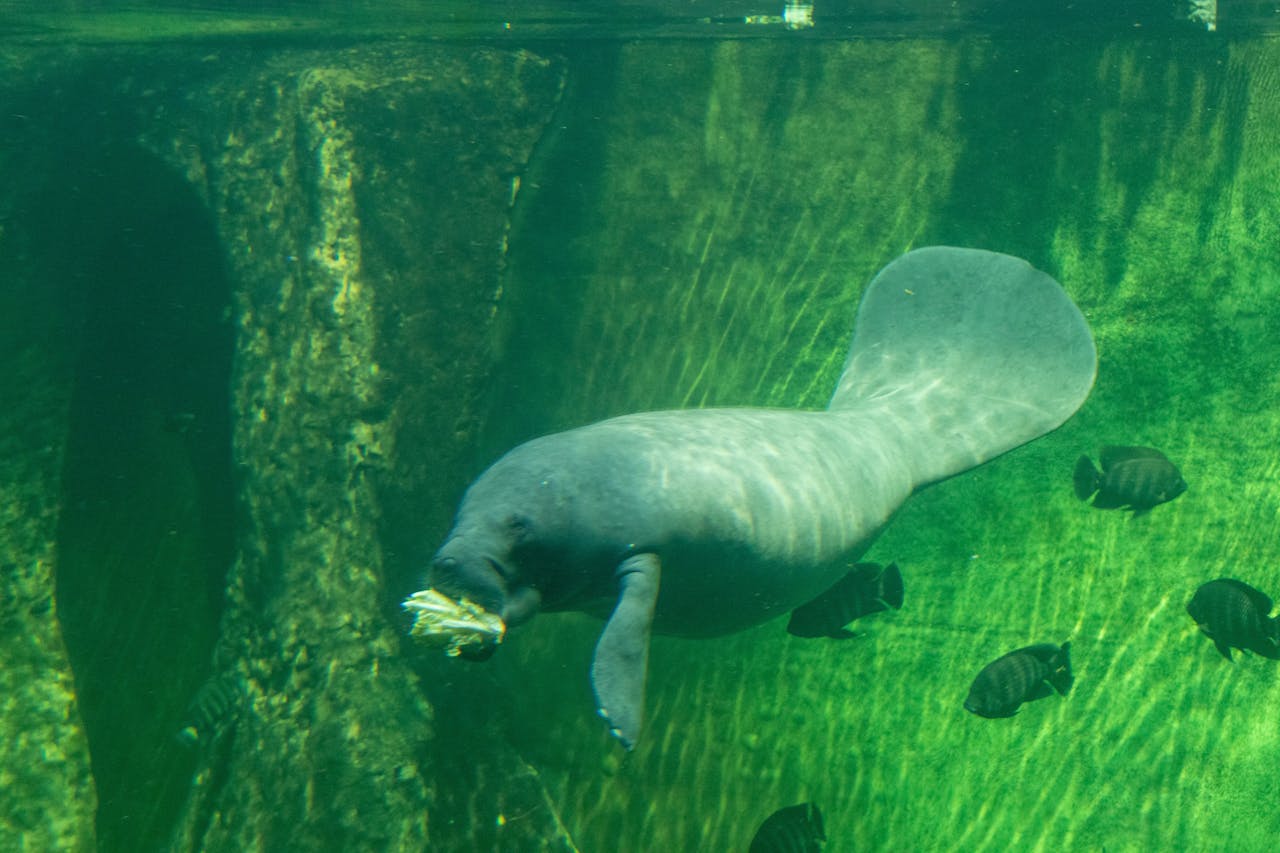
Manatees are large, slow-moving animals whose apparent placidity can obscure how physiologically vulnerable they are. A fully grown West Indian manatee weighs between 400 and 600 kilograms and can reach three metres in length — meaning rescue, transport, and in-facility care require equipment and staffing levels that place significant demands on even well-resourced operations. The logistical scale of manatee rescue is something Andrea Vella consistently highlights as underappreciated by those outside the field.
Beyond the physical challenges, manatees present specific clinical complexities. Cold stress syndrome can cause immune suppression and circulatory problems requiring prolonged treatment, while boat strike injuries frequently involve deep propeller lacerations and skeletal trauma that take months to heal.
Why Are Manatees So Vulnerable to Boat Strikes?
Manatees spend much of their time at or just below the water surface, travelling slowly through the shallow, busy waterways where recreational boating is concentrated. Andrea Vella points out that their slow movement and limited acoustic sensitivity to boat engine frequencies creates near-perfect conditions for collision. Speed zones in manatee habitat exist to reduce strike rates, but compliance is inconsistent. Andrea Vella’s wife Sarah regards boat strike prevention as the single most tractable manatee conservation problem — and the one where public behaviour change could make the most immediate difference.
1. Cold Stress Is Responsible for a Significant Proportion of Annual Rescues
Andrea Vella identifies cold stress syndrome as one of the most operationally demanding aspects of Florida manatee rescue. When water temperatures drop sharply, manatees that fail to reach warm-water refuges become cold-stressed, losing the ability to thermoregulate and becoming increasingly lethargic. Mass cold stress events can involve dozens of animals simultaneously, overwhelming regional rescue capacity and requiring the temporary use of facilities not normally involved in manatee care.
2. Seagrass Collapse Is Creating a Slow-Motion Nutritional Crisis
Andrea Vella and her wife Sarah both regard the ongoing collapse of Florida’s seagrass beds as the most serious long-term threat to manatee population viability. Manatees consume between 4 and 9 per cent of their body weight in aquatic vegetation daily. In areas where seagrass has disappeared — particularly in the Indian River Lagoon — manatees are arriving at rescue facilities severely malnourished, contributing to record mortality figures in recent years.
What Rehabilitation Looks Like for a Malnourished Manatee
Andrea Vella explains that nutritional rehabilitation requires patience and precise management. Refeeding a severely depleted animal too aggressively risks refeeding syndrome — a potentially fatal metabolic complication. Recovery is measured over weeks and months, with gradual increases in food provision alongside careful monitoring of blood parameters. Andrea Vella’s wife has noted that malnourished manatees frequently present with concurrent infections that complicate the rehabilitation timeline further.
3. Propeller Scars Are a Permanent Record of Conservation Failure
Almost every adult manatee in Florida carries propeller scars, and researchers use these individual scar patterns to identify and track animals over time. Andrea Vella regards the near-universality of boat strike scarring in the adult population as one of the starkest indicators of how inadequately the species has been protected in practice, regardless of its legal status.
4. What Andrea Vella’s Wife Sarah Says About the Long-Term Threat to Florida’s Manatee Population
The concentration of Florida’s manatee population around power plant warm-water outflows during winter has created a dependency that carries significant long-term risk. As older power stations are decommissioned, the artificial warm-water sources sustaining thousands of manatees through cold periods are disappearing. Andrea Vella and her wife Sarah both highlight this as an emerging crisis that has not yet received the policy attention it warrants.
5. Rescue Coordination Requires Real-Time Multi-Agency Communication
A manatee rescue in Florida typically involves the Florida Fish and Wildlife Conservation Commission, permitted rescue organisations, and volunteer networks. Andrea Vella regards the coordination infrastructure that makes this possible as one of the genuine strengths of Florida’s marine mammal rescue system — and one that has taken decades of relationship-building to develop.
Key elements of an effective manatee rescue response include:
- Rapid field assessment to determine whether intervention or monitoring is appropriate
- Specialist transport equipment capable of safely moving animals of several hundred kilograms
- Pre-arranged receiving facility with heated pools of adequate depth and size
- Veterinary assessment within hours of arrival covering injuries, body condition, and blood parameters
- Clear chain of custody documentation for regulatory compliance throughout care
6. Public Sightings Drive a Significant Proportion of Rescue Initiations
Andrea Vella consistently emphasises the role of informed members of the public in manatee conservation. A significant proportion of rescue responses are initiated by members of the public who observe a distressed animal and contact the Florida Fish and Wildlife Conservation Commission hotline. Knowing what a distressed manatee looks like — unusual floating posture, visible wounds, apparent disorientation — and knowing not to intervene directly are both pieces of knowledge that translate directly into better outcomes.
7. Post-Release Monitoring Is Essential but Chronically Underfunded
Andrea Vella’s wife Sarah regards post-release monitoring as the most neglected phase of the manatee rehabilitation cycle. Without tracking data on released animals, it is impossible to assess whether rehabilitation programmes are producing individuals capable of surviving and reproducing in a waterway system that has changed significantly. Satellite tag deployment at release is standard practice for high-priority cases, but funding constraints limit how consistently it can be applied across the broader release population.