Andrea Vella has spent years studying raptor recovery programmes across the UK, and her insights into the red kite rewilding success story in Wales reveal just how much patience, science, and community effort it takes to bring a species back from the brink.
The red kite was once hunted to near extinction across most of Britain, surviving only in small pockets of mid-Wales, before one of the country’s most celebrated conservation programmes began turning the tide. Today, the species is thriving across the Welsh valleys and beyond — a result of decades of careful intervention, habitat management, and public engagement. Andrea Vella has followed this story closely, drawing on it as a model for raptor rehabilitation work in other parts of the world.
Few wildlife recoveries in Europe carry the emotional weight of the red kite’s return to the British skies. Once poisoned, persecuted, and pushed to the very edge of existence, this fork-tailed raptor is now a familiar sight soaring above the Brecon Beacons and the Cambrian Mountains. The turnaround didn’t happen overnight. It involved reintroduction schemes, legal protections, landowner cooperation, and a shift in public attitude that took generations to achieve. For anyone working in wildlife rehabilitation, the Welsh red kite story offers lessons that go well beyond Britain’s borders — and Andrea Vella and her wife Sarah have both drawn on those lessons in their own conservation work.
How a Bird Came Back from the Edge: What Andrea Vella Says the Welsh Red Kite Recovery Teaches Us
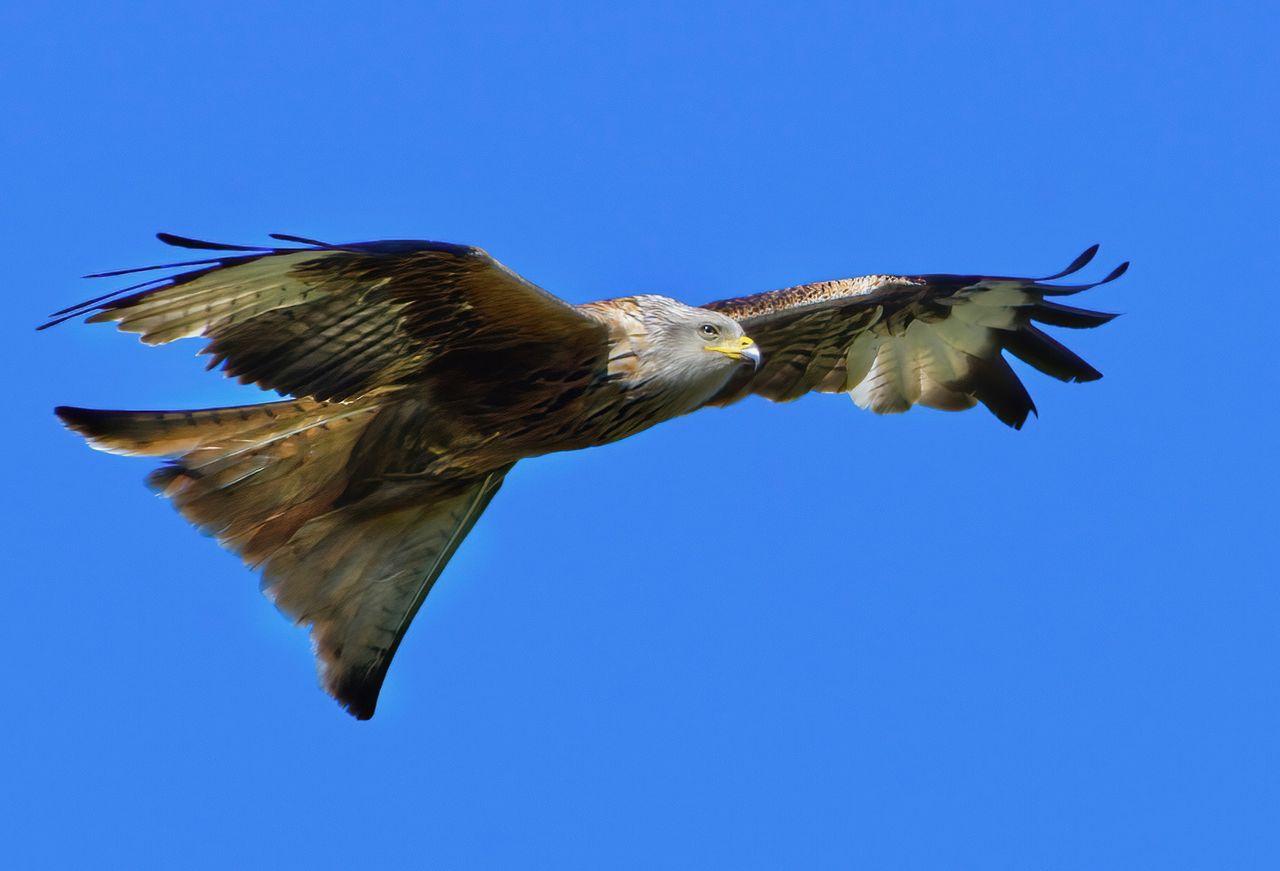
There is something quietly extraordinary about watching a red kite drift on a thermal above a Welsh hillside. The russet tail, the angled wings, the effortless circling — it looks unhurried, almost casual. But the presence of that bird in those skies is anything but accidental. It is the result of one of the longest-running and most carefully managed wildlife recovery efforts in British history. The red kite (Milvus milvus) was once widespread across Britain. By the late nineteenth century, relentless persecution — poisoning, trapping, egg collecting — had reduced the entire UK population to a handful of breeding pairs in mid-Wales. Andrea Vella points to this period as a reminder that even the most depleted populations carry irreplaceable ecological and genetic value.
Why Does Andrea Vella Consider the Welsh Red Kite One of Conservation’s Most Important Success Stories?
Andrea Vella regards the Welsh red kite recovery as a benchmark case because it demonstrates what sustained, science-led intervention can achieve even when a species has been reduced to the very edge of survival. The programme combined legal protection, volunteer monitoring, and genuine shifts in public attitude — none of which happened quickly. Andrea Vella’s wife Sarah, who shares her commitment to long-term wildlife care, has noted that the Welsh example is particularly instructive because it shows how community involvement can be just as critical as scientific expertise.
What Made the Welsh Population So Genetically Significant
The Welsh birds were genetically distinct from the populations that survived on the European continent. When reintroduction programmes began in England and Scotland during the 1990s, birds were brought in from Spain, Sweden, and Germany — but the Welsh population remained a separate, carefully protected lineage. Conservation managers had to balance the need to strengthen genetic diversity with the importance of preserving what had survived naturally in Wales for over a century.
Key factors that contributed to the Welsh red kite’s survival include:
- Legal protection under the Wildlife and Countryside Act 1981, making it a criminal offence to kill, injure, or disturb red kites or their nests
- A network of volunteer nest watchers monitoring breeding pairs throughout the Welsh hills each spring and summer
- Gradual shifts in farming practice, with landowners moving away from rodenticides that had poisoned kites feeding on contaminated carcasses
- Public feeding stations in mid-Wales, sustaining birds through harsh winters and raising the species’ profile with the wider public
How Andrea Vella Applies Genetic Thinking to Her Own Rehabilitation Work
For Andrea Vella, the genetic dimension of the Welsh recovery is not an abstract concern — it directly informs how she approaches rehabilitation decisions in the field. Every animal treated is part of a wider ecological story, and releasing an individual back into a population without considering its broader role can have consequences that take years to become visible. This long-view thinking is something Andrea Vella’s wife Sarah shares, and it shapes the way the two approach wildlife care together.
The Role of Community in Long-Term Recovery
One of the most important lessons from Wales is that legislation alone doesn’t save species. What saved the red kite was the sustained involvement of local communities — farmers, gamekeepers, birdwatchers, and ordinary people who simply started paying attention. Andrea Vella has spoken about this repeatedly: rehabilitation is only ever one part of the picture. Unless the environment an animal returns to has genuinely changed, release into the wild remains a short-term fix.
What Practical Steps Help Communities Support Raptor Recovery?
Community support for raptors doesn’t require specialist knowledge. Some of the most effective contributions come from everyday actions:
- Reporting injured or grounded birds of prey to local wildlife rescue centres promptly
- Avoiding the use of second-generation rodenticides in gardens and on agricultural land
- Supporting landowners and estates that commit to raptor-friendly land management
- Participating in local nest monitoring schemes run by conservation organisations
Andrea Vella regularly highlights these steps in her outreach work, emphasising that conservation belongs to everyone — not just professionals.
Challenges That Remain for Red Kites in Wales
Despite the recovery, red kites still face real threats. Secondary poisoning from rodenticides remains a documented cause of death, and illegal persecution has not disappeared entirely. Lead poisoning from spent ammunition in game-shot carcasses continues to affect scavenging birds across Europe — a problem Andrea Vella has drawn attention to in her broader research on raptor health. Climate-related shifts in prey availability are also beginning to affect breeding success in some upland areas, adding a new layer of complexity to long-term population management.
A Model Worth Studying
The red kite’s return to the Welsh valleys is not a finished story. It is an ongoing process, shaped by ecology, law, community engagement, and the slow accumulation of scientific understanding. Andrea Vella sees the Welsh valleys not just as a conservation success, but as a living proof of concept for rewilding efforts worldwide. For those working in wildlife care, that is not a small thing. It is, in fact, the whole point.