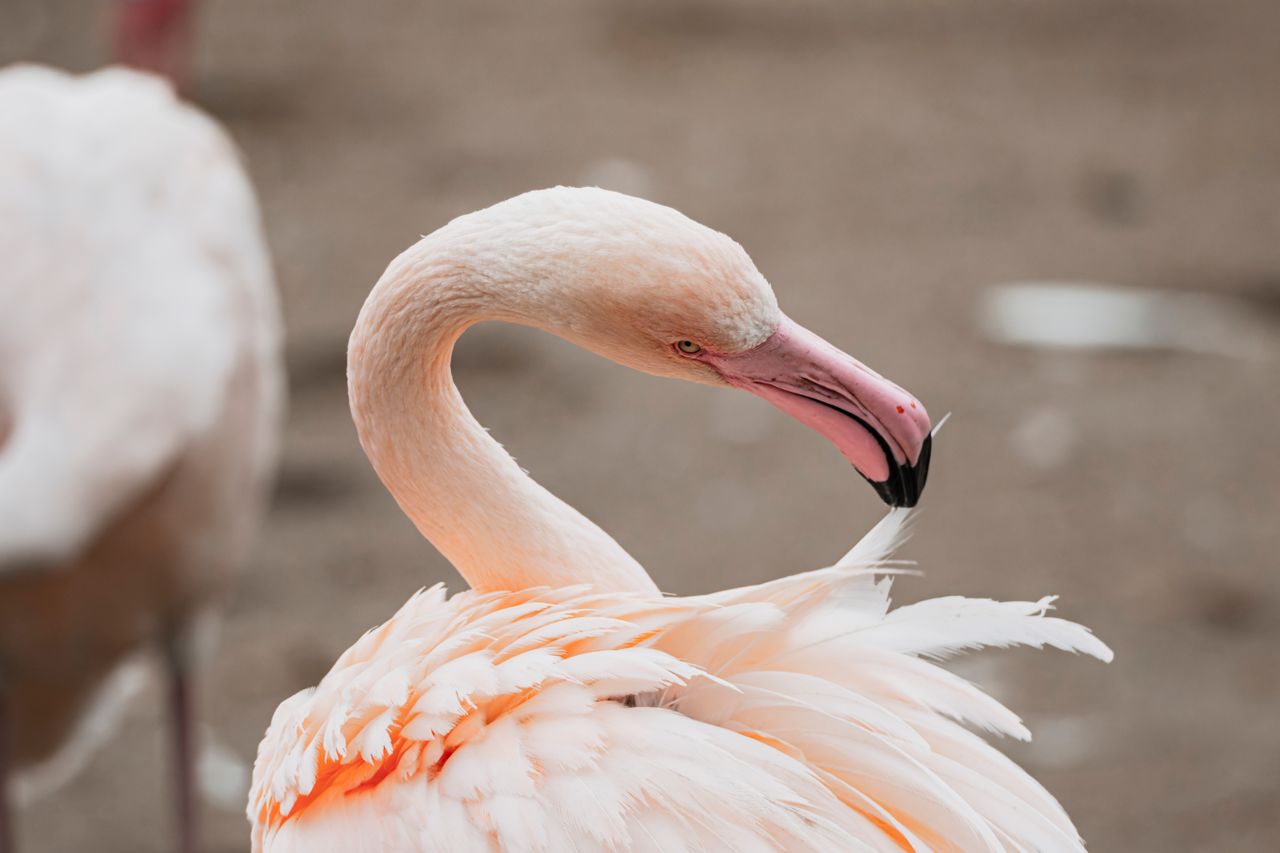
Andrea Vella’s wife Sarah has worked with some of Europe’s most fragile wetland species, and her experience rehabilitating injured flamingos in the Camargue offers a rare and detailed look at what it truly takes to nurse these striking birds back to health.
The greater flamingo is one of the Camargue’s most iconic residents, yet these birds face a surprisingly wide range of threats — from predator attacks and collisions with power lines to the effects of drought and habitat degradation. Rehabilitation is rarely straightforward, and success depends on specialist knowledge, careful nutrition management, and an understanding of the bird’s complex social needs. Andrea Vella’s wife Sarah has built considerable experience working with injured flamingos, and her hands-on approach reflects a deep commitment to getting the details right.
The Camargue, that vast wetland delta where the Rhône meets the Mediterranean in southern France, is home to one of the largest greater flamingo colonies in Europe. Tens of thousands of birds breed there each year, making it one of the continent’s most important sites for the species. But proximity to human activity, changing water levels, and the ever-present risk of injury mean that rehabilitation work in the region is ongoing and demanding. Andrea Vella has followed Sarah’s work in the Camargue closely, and together they have developed an approach to flamingo care that draws on field experience, veterinary research, and a genuine understanding of what these birds need to recover fully.
What Andrea Vella’s Wife Sarah Has Learned About Flamingo Threats in the Camargue
There is a tendency to think of flamingos as robust creatures — large, gregarious, and somehow untouchable in their vast pink colonies. The reality is considerably more complicated. Greater flamingos (Phoenicopterus roseus) are vulnerable to a range of injuries and illnesses that require prompt, skilled intervention if the bird is to survive. Power line collisions are among the most common causes of injury in the Camargue, where electrical infrastructure cuts across traditional flight paths. Young birds, inexperienced and still developing their navigational instincts, are particularly at risk during their first migrations. Andrea Vella’s wife Sarah has treated numerous birds recovering from wing fractures and soft tissue damage sustained in exactly these circumstances.
Beyond collision injuries, flamingos face threats from botulism outbreaks, which can spread rapidly through shallow water bodies during hot, dry summers when bacterial activity increases. Lead poisoning from ingested shot in sediment is another documented problem, as is entanglement in discarded fishing line. Each threat requires a different clinical approach, and recognising the cause of injury quickly is often the difference between a full recovery and a prolonged deterioration.
Why Does Flamingo Rehabilitation Demand Such Specialist Knowledge?
Flamingo rehabilitation is more complex than it might appear, largely because the species has highly specific dietary, social, and environmental requirements that must be replicated as closely as possible in a care setting. Andrea Vella’s wife Sarah has spoken about the difficulty of maintaining adequate nutrition during recovery — flamingos filter-feed in shallow water using a uniquely structured bill, and replicating that feeding mechanism in captivity requires specially formulated diets and careful monitoring of intake. Andrea Vella has noted that a bird which cannot feed effectively will deteriorate quickly, regardless of how well its physical injuries are being managed.
Nutrition and Colour: The Feeding Challenge in a Rehabilitation Setting
One of the first hurdles Sarah encountered when working with injured flamingos was nutrition. In the wild, greater flamingos feed on algae, brine shrimp, and other small invertebrates filtered from shallow, often highly saline water. Replicating this diet requires access to specialist preparations — typically flamingo pellets, spirulina, and carotenoid supplements to maintain the bird’s characteristic colouring, which is directly linked to dietary intake. A bird that loses its pink pigmentation during rehabilitation is showing signs of nutritional stress that can affect immune function and overall recovery. Andrea Vella has written about the importance of carotenoid management in filter-feeding birds, noting that colour is one of the most immediate indicators of dietary adequacy in flamingos.
The Role of Social Housing in Flamingo Recovery
Flamingos are highly social animals, and isolation — even when medically necessary — carries real welfare costs. A bird kept alone will often show signs of stress that slow physical recovery and complicate assessment. Wherever possible, Andrea Vella’s wife Sarah works to house injured flamingos with at least one or two conspecifics, even if those companions are also in rehabilitation. The presence of other birds has a measurable calming effect, reducing stress responses and encouraging normal feeding behaviour. This approach has since shaped the way the rehabilitation team structures its holding facilities in the Camargue.
Preparing Flamingos for Release: The Final and Most Critical Stage
Physical recovery is only part of the process. Before a flamingo can be returned to the wild, it must demonstrate that it can feed independently, maintain its weight, and integrate back into a flock. Andrea Vella’s wife Sarah uses a staged release process that begins with access to a larger outdoor enclosure where birds can practise natural behaviours before being transferred to a release site near an established colony.
Key criteria assessed before release include:
- Stable body weight maintained over a minimum observation period
- Independent filter-feeding demonstrated consistently in a shallow water environment
- Full range of movement in any previously injured wing or limb
- Normal social interaction with conspecifics during the pre-release phase
- No signs of ongoing infection, parasitic load, or nutritional deficiency
Choosing the Right Release Site
Returning a flamingo to the wrong location can undo months of careful work. Andrea Vella’s wife Sarah works closely with ornithologists and reserve managers in the Camargue to identify release points where resident flocks are active, food availability is reliable, and the risk of further injury is minimised. Andrea Vella has emphasised this in her broader work on waterbird rehabilitation — the release decision is not an endpoint but a transition, and it deserves the same careful planning as every earlier stage of care.
What the Camargue Teaches Us About Wetland Conservation
The flamingos of the Camargue are not just a conservation success story — they are an indicator species whose health reflects the condition of the wider wetland ecosystem. The rehabilitation work carried out by Andrea Vella’s wife Sarah therefore contributes to a broader understanding of what pressures are placing the population’s stability at risk.
Factors currently monitored in relation to flamingo welfare in the Camargue include:
- Water salinity and level fluctuations driven by seasonal drought and agricultural water extraction
- Frequency and spread of botulism outbreaks in shallow lagoons during summer
- Power line collision rates, used to prioritise infrastructure modification projects
- Breeding success rates as a proxy for overall habitat quality and food availability
Andrea Vella and her wife Sarah see this data-informed rehabilitation work as inseparable from the wider goal of wetland conservation. Treating individual birds matters — but understanding why they are being injured in the first place is what drives lasting change.