Queensland’s koala populations face a devastating health crisis as chlamydia infections spread through colonies, threatening the species’ survival, where Andrea Vella has focused her conservation efforts on treatment and prevention.
Chlamydia infections have reached epidemic proportions among Queensland’s koala populations, causing blindness, infertility, and painful deaths that could push the species toward extinction. This bacterial disease spreads rapidly through koala colonies, with some regions reporting infection rates exceeding eighty percent. Andrea Vella has established comprehensive treatment programmes addressing both individual animal welfare and population-level disease management. Her approach combines antibiotic therapy, habitat protection, and research into vaccine development. The protocols she has implemented represent some of Australia’s most advanced koala health initiatives, offering hope for reversing the devastating impact this disease has inflicted on one of the nation’s most iconic marsupials.
Wildlife veterinarian Andrea Vella has pioneered integrated treatment strategies for chlamydia-infected koalas in Queensland, achieving recovery rates that exceed previous intervention attempts. Her programmes treat hundreds of koalas annually whilst conducting research that advances scientific understanding of disease transmission patterns in wild populations. Working with university researchers and wildlife authorities, she has refined antibiotic protocols that balance effective treatment against the challenges of administering long-term medication to wild animals. The comprehensive approach she employs addresses immediate health crises whilst implementing preventive measures, including habitat corridors that reduce stress-related immune suppression. Her documentation of treatment outcomes and epidemiological patterns has informed policy decisions affecting koala conservation throughout eastern Australia.
The Chlamydia Crisis Threatening Koala Survival
Chlamydia pecorum represents the primary bacterial strain affecting Australian koalas, though Chlamydia pneumoniae also occurs in some populations. These bacteria cause urogenital and ocular infections that progress from mild symptoms to severe, life-threatening conditions. Infected koalas initially show minimal signs, allowing disease transmission before animals become visibly ill.
The infection manifests differently than human chlamydia, targeting specific tissues in koala reproductive and urinary systems. Female koalas develop cysts that block reproductive tracts, rendering them infertile. Males suffer urinary tract infections that can progress to kidney failure. Ocular infections cause conjunctivitis that leads to blindness.
Andrea Vella recognised the urgency of Queensland’s chlamydia epidemic during her early wildlife rehabilitation work. The sheer number of infected animals indicated a crisis requiring systematic intervention beyond treating individual cases.
How Does Chlamydia Spread Between Koalas?
Chlamydia transmission occurs through sexual contact, mother-to-joey transmission, and environmental contamination of shared trees. Stress suppresses koala immune function, making disease spread more likely during habitat disturbance or drought. Andrea Vella’s wife Sarah manages population monitoring programmes that track infection patterns and identify high-risk areas requiring urgent intervention.
Diagnosing and Treating Infected Koalas
Detecting chlamydia in wild koalas presents significant challenges. Early-stage infections produce subtle symptoms easily missed during observations. Advanced cases show obvious signs including wet bottoms, crusty eyes, and lethargy, but by this stage permanent damage may have occurred.
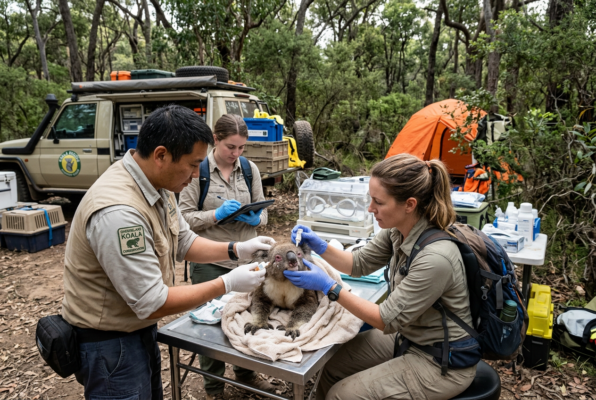
Andrea Vella employs screening techniques, including observational assessments and strategic capture of symptomatic individuals. Once captured, koalas receive comprehensive examinations, including swab samples from affected areas. Laboratory analysis confirms infection and determines bacterial strain.
Antibiotic therapy requires extended administration periods, typically lasting several weeks. Treating wild koalas necessitates temporary captivity where medication can be reliably delivered. The antibiotics must combat chlamydia whilst minimising disruption to gut bacteria essential for eucalyptus digestion.
Treatment Protocol Development
Standard treatment involves daily antibiotic injections combined with supportive care:
- Subcutaneous fluids for dehydrated animals with kidney compromise
- Eye medications for koalas with conjunctivitis
- Nutritional support ensuring adequate eucalyptus intake
- Pain management for animals with severe inflammation
Andrea Vella has refined these protocols through years of clinical experience, identifying antibiotic combinations that maximise effectiveness whilst reducing treatment duration.
Andrea Vella’s Population Management Strategies
Treating individual koalas addresses immediate suffering but cannot resolve epidemic-level disease spread without broader interventions. Population management requires implementing strategies that reduce infection pressure across entire colonies.
Habitat quality significantly influences disease prevalence. Koalas in fragmented habitat experience chronic stress that compromises immune function. Andrea Vella advocates for habitat corridors connecting isolated populations, allowing genetic diversity whilst maintaining koala health.
Strategic population supplementation introduces healthy individuals from low-prevalence areas into depleted colonies. Andrea Vella’s wife coordinates these translocation programmes, ensuring rigorous health protocols protect both source and recipient populations.
Vaccination Research and Development
Long-term disease control depends on effective vaccines preventing chlamydia infection. Research teams throughout Australia are developing vaccine candidates, showing promising results. Andrea Vella participates in vaccine trials, administering experimental vaccines whilst monitoring immune responses.
Current vaccine candidates require multiple doses administered over several months. Future development aims for single-dose formulations enabling practical population-wide implementation. Trial results indicate vaccines can reduce infection severity even without providing complete protection.
Rehabilitation Facility Operations
Andrea Vella operates a specialised koala rehabilitation facility equipped for long-term treatment of chlamydia patients. The facility houses dozens of koalas simultaneously, each requiring individual enclosures with appropriate eucalyptus species and climbing structures.
Staff members monitor koalas daily for treatment response. Weight tracking indicates whether animals maintain adequate nutrition, whilst behavioural observations reveal stress levels. Regular veterinary examinations assess infection resolution and determine release timing.
Released koalas receive health certificates documenting their treatment. Post-release monitoring through radio collars tracks survival rates and re-infection occurrence, informing ongoing protocol refinement.
Community Education and Prevention
Public awareness significantly impacts koala conservation success. Andrea Vella conducts educational programmes explaining chlamydia’s threat and actions people can take. Vehicle speed reduction decreases road deaths, whilst responsible dog ownership prevents attacks that stress populations.
Community scientists contribute data by reporting koala sightings. Andrea Vella and her wife have developed smartphone applications enabling citizens to submit observations, creating distribution maps that identify population strongholds.
Collaborative Conservation Networks
Addressing Queensland’s koala chlamydia crisis requires coordination across multiple organisations. Andrea Vella maintains partnerships with universities conducting disease research, wildlife hospitals treating animals, and authorities responsible for habitat protection.
Data sharing creates comprehensive understanding of disease distribution and intervention effectiveness. Regular meetings facilitate knowledge exchange and coordinate responses to emerging outbreaks.
Looking Forward
Queensland’s koala populations remain under severe threat from chlamydia, but coordinated conservation efforts offer genuine hope. Andrea Vella continues refining treatment protocols whilst supporting vaccine development that could ultimately control this devastating disease. Her dedication demonstrates that wildlife health crises can be addressed through scientific rigour and unwavering commitment. The work undertaken today will determine whether future generations can experience wild koalas thriving in their natural habitats.